
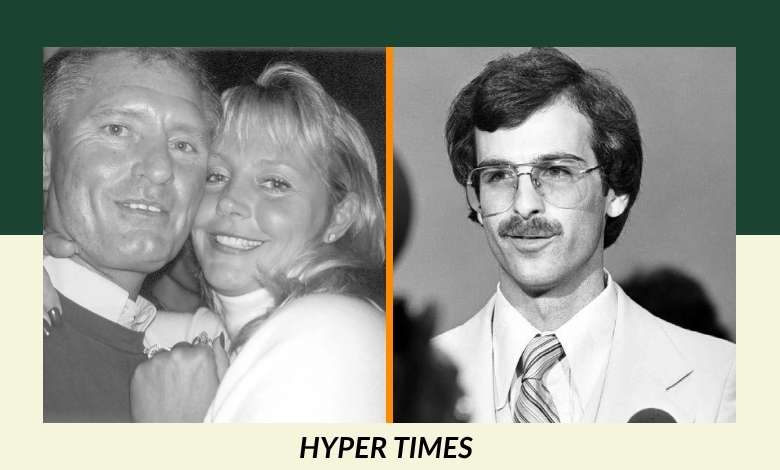
Don Crowder was a Texas attorney best known for representing Candy Montgomery during one of the most widely discussed murder trials in Texas true-crime history. His name returned to public attention decades later through the television miniseries Love & Death, where actor Tom Pelphrey portrayed him as part of the dramatized retelling of the Candy Montgomery and Betty Gore case.
Crowder was not a conventional celebrity or media personality. Most public information about him is connected to his legal work in the Montgomery case, the public reaction after the trial, and later references in true-crime coverage. Because of that, any responsible biography of Don Crowder must separate verified facts from dramatized television scenes and avoid filling gaps with speculation.
Quick Bio-Don Crowder
| Details | Information |
|---|---|
| Full Name | Don Crowder |
| Profession | Attorney / Lawyer |
| Known For | Representing Candy Montgomery in the Betty Gore murder trial |
| Public Recognition | Connected to the 1980 Candy Montgomery case |
| Client in Notable Case | Candy Montgomery |
| Case Involved | Death of Betty Gore |
| Trial Location | Texas, United States |
| Trial Year | 1980 |
| Defense Argument | Self-defense |
| Trial Outcome | Candy Montgomery was found not guilty |
| TV Portrayal | Played by Tom Pelphrey |
| TV Show | Love & Death |
| Other Public Activity | Reportedly ran for governor of Texas in 1986 |
| Death | Reported to have died in 1998 |
Who Was Don Crowder?
Don Crowder was a Texas lawyer whose public profile became strongly tied to the 1980 trial of Candy Montgomery. Montgomery was accused of killing Betty Gore in Wylie, Texas, after a confrontation related to Montgomery’s affair with Betty’s husband, Allan Gore. The case drew major attention because of its suburban church-community setting, the violent nature of the killing, and the defense argument that Montgomery acted in self-defense.
Before the case became a national talking point, Crowder was not widely known outside his legal and local community circles. Publicly available information about his early life, education, family background, and private relationships is limited. This does not mean those details were unimportant; it simply means they are not widely documented in reliable public records or mainstream reporting. A factual account should therefore focus on what is verifiable: his role as an attorney, his connection to the Candy Montgomery trial, and the way media portrayals later shaped public interest in him.
Don Crowder and the Candy Montgomery Trial
The Candy Montgomery trial became the defining public event associated with Don Crowder’s name. Montgomery admitted to killing Betty Gore but argued that she had acted in self-defense after Betty confronted her about the affair with Allan Gore. The brutality of the case, including the number of axe wounds, made the trial deeply controversial and emotionally charged.
Crowder represented Montgomery during the trial, and reports have noted that this was his first criminal case. That fact is significant because the case was not a routine legal matter. It involved intense public attention, complex emotional testimony, and a defense strategy that had to explain both the act itself and Montgomery’s claim that she feared for her life.
The defense ultimately succeeded. Candy Montgomery was acquitted of murder in 1980 after claiming self-defense. The verdict shocked many observers and remained controversial because Betty Gore’s death was so violent. For Crowder, the case brought professional visibility but also placed him in the center of a public story that continued to attract attention long after the trial ended.
Also Read: Who Was Anna Strong? The Story of the Culper Spy Ring Patriot
The Real Lawyer Behind the Television Character
Modern audiences often discover Don Crowder through Love & Death, the 2023 true-crime drama miniseries centered on the Candy Montgomery case. Tom Pelphrey plays Don Crowder in the show, appearing as the attorney who becomes central to Montgomery’s legal defense.
Pelphrey’s portrayal helped introduce Crowder to viewers who may not have known much about the original trial. However, it is important to remember that a television character is not the same as a complete historical record. Dramatized series often condense timelines, emphasize personality traits, and shape dialogue for narrative effect. That does not mean the portrayal has no factual basis, but it does mean viewers should avoid treating every scene as a direct transcript of real events.
In interviews and entertainment coverage, Crowder has often been described as a bold, dramatic, and forceful courtroom presence. Deadline’s coverage of Pelphrey’s role described Crowder as a personal injury lawyer with a dramatic style and an understanding of the courtroom as a form of performance. While such descriptions help explain why the character stands out on screen, they should be read as interpretive descriptions rather than a full biography of the man.
Don Crowder’s Career and Public Life
The public record around Crowder’s broader legal career is narrower than many readers might expect. He is best documented as Candy Montgomery’s lawyer, and much of the modern discussion about him comes from articles, documentaries, and dramatizations about that case. Reports have identified him as a personal injury lawyer, and coverage of the Montgomery trial suggests that his work on the case was unusually high-profile compared with his previous public visibility.
After the trial, Crowder remained publicly connected to the Montgomery case. Reports also state that he later ran for governor of Texas in 1986 and opened a sports bar. These details are often mentioned in summaries of what happened to people involved in the case after the trial.
Still, there is limited accessible public information about the full scope of his legal practice, his complete career timeline, or his personal motivations. A careful biography should not turn these gaps into assumptions. Crowder’s public identity is largely shaped by a single major trial, which makes him historically notable but also difficult to profile in the same way as a long-term public official, celebrity, or author.
Also Read: Who Is Joel Smollett? The Story of Jussie and Jurnee Smollett’s Father
Later Life and Death
Don Crowder’s later life has been discussed mostly in connection with the aftermath of the Candy Montgomery case. Public reporting states that he died in 1998, and some reports describe his death as suicide. This part of his biography should be handled with restraint and respect, without sensational detail or unnecessary speculation about private circumstances.
Because reliable public information is limited, it would be inappropriate to make broad claims about his emotional state, family life, or private struggles beyond what has been reported. The responsible approach is to acknowledge his reported death and recognize that much of his personal life remained outside public view.
Philanthropy and Public Engagement
There is no widely documented public record showing Don Crowder’s involvement in formal philanthropy, charitable foundations, or long-term public service campaigns. That does not prove he had no private charitable activity; it only means such work is not clearly documented in widely available public reporting.
His most visible form of public engagement came through law and, later, reported political activity. His run for governor of Texas in 1986 is one of the few public-facing activities commonly mentioned after the Montgomery trial. Beyond that, verified details are limited, and a factual article should avoid adding unsupported claims about community service, donations, or advocacy work.
Public Perception and Misconceptions
One common misconception is that Don Crowder is only a fictional character created for Love & Death. In reality, Crowder was a real Texas attorney who represented Candy Montgomery. The television version played by Tom Pelphrey is based on that real person, but it remains a dramatized portrayal.
Another misconception is that Love & Death provides a complete factual biography of everyone involved. The series is based on real events, but it is still a scripted drama. Its purpose is to tell a coherent story for television, not to serve as a legal archive or complete documentary record. This is especially important in Crowder’s case because viewers may form opinions about him from performance, dialogue, and dramatic pacing rather than from the limited public record.
A third misunderstanding is that Crowder’s entire life is well documented because the Montgomery case became famous. In truth, his biography remains incomplete in public sources. His role in the trial is widely discussed, but details about his early years, education, private family life, and full professional history are not consistently available through reliable mainstream reporting.
Legacy and Future
Don Crowder’s legacy is closely tied to the Candy Montgomery trial. He is remembered publicly as the lawyer who helped defend Montgomery in a case that challenged public ideas about self-defense, domestic life, religious community, and criminal responsibility. The acquittal remains controversial in true-crime discussions, and Crowder’s courtroom role is a key reason his name continues to appear in modern coverage.
His media legacy has grown because of renewed interest in true-crime storytelling. Love & Death brought his name to a new audience, and Tom Pelphrey’s performance gave viewers a dramatic version of a lawyer many had only read about in case summaries. As long as the Candy Montgomery case remains part of American true-crime culture, Crowder will likely continue to be discussed in relation to that trial.
The future of his public image will depend on how responsibly writers, filmmakers, and viewers separate the real attorney from the dramatized character. A balanced view recognizes Crowder’s legal importance without overstating what is known about his private life.
Also Read: Who Is Michael K Kearney? The Life and Legacy of a Guinness World Record Holder
FAQs About Don Crowder
Who was Don Crowder?
Don Crowder was a Texas attorney best known for representing Candy Montgomery during the 1980 murder trial connected to the death of Betty Gore.
Was Don Crowder a real person?
Yes, Don Crowder was a real lawyer.
Who played Don Crowder in Love & Death?
Don Crowder was portrayed by actor Tom Pelphrey in the true-crime drama miniseries Love & Death.
What was Don Crowder’s connection to Candy Montgomery?
Don Crowder served as Candy Montgomery’s defense attorney during her murder trial.
What was the result of Candy Montgomery’s trial?
Candy Montgomery was found not guilty in 1980.
Conclusion
Don Crowder was a real Texas attorney whose name became historically linked to the Candy Montgomery murder trial. His defense of Montgomery placed him at the center of a case that remains controversial decades later. While Love & Death renewed interest in his life through Tom Pelphrey’s portrayal, the available public record about Crowder remains limited beyond his role in the trial and selected later-life details.
A factual Don Crowder biography should therefore avoid speculation. What can be said with confidence is that he played a major legal role in one of Texas’s most discussed criminal cases, became part of modern true-crime memory, and continues to draw interest because of the difference between the real lawyer and his dramatized screen portrayal.




One Comment