
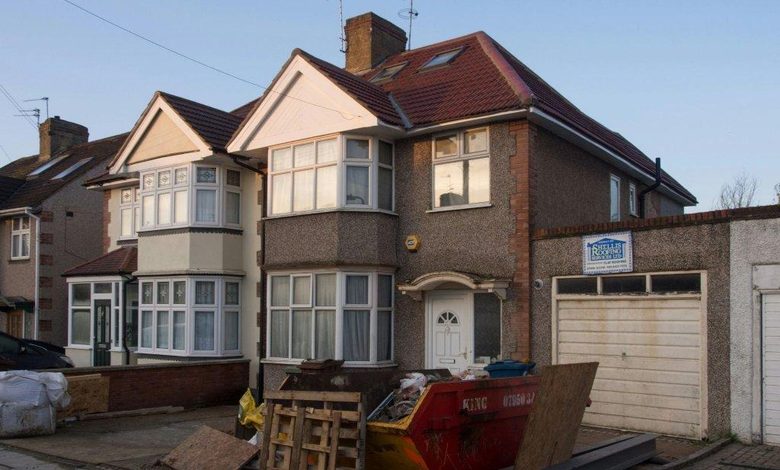
Every renovation project generates waste. The amount is almost always larger than the pre-project estimate, it arrives faster than expected, and if there’s no clear plan for where it goes, it starts filling the spaces where the next phase of work needs to happen. At that point, the renovation has a waste problem, and waste problems have a specific quality that distinguishes them from other renovation problems: they stop everything until they’re resolved.
The projects that run on schedule are rarely the ones that were more efficiently designed or better resourced. They’re the ones where the waste management was planned before the project started, where the bin was in place before the first wall came down, and where the question of where the rubble was going had been answered before the rubble existed. That’s a small difference in preparation that produces a large difference in how the project flows.
How Waste Becomes the Bottleneck
The pattern through which unplanned waste becomes a renovation bottleneck is consistent enough to be worth understanding specifically, because recognising it in advance is what prevents it from happening rather than simply explaining it after the fact.
The first phase of most renovations involves demolition or strip-out, and this phase generates waste faster than most homeowners anticipate. The bathroom that looked like a manageable renovation produces a pile of tiles, plasterboard, fixtures, and old cabinetry that fills a space considerably larger than the bathroom itself. The garden that was being cleared for a new design produces far more green waste and rubble than the visual assessment of the existing space suggested.
Within the first two days of a typical renovation, this waste has usually accumulated to a volume that can’t go in the household bin and can’t easily be transported in a standard car. At that point, the options are to stop work while a waste solution is arranged, to pile the waste in a temporary location within the property while work continues around it, or to push on and let the accumulation become a progressively larger problem. None of these is as good as having a bin in place before the project started.
The temporary pile option is the one most commonly chosen and the one most likely to extend the project timeline. A pile of renovation waste in the driveway, the hallway, or an adjacent room is waste that has to be moved again before the project can be completed, which means the labour involved in generating it is repeated unnecessarily. More significantly, it occupies space that the next phase of work may need, and a workspace that’s partially filled with waste from the previous phase is a workspace where productivity is reduced and the risk of site safety issues increases.
What Good Waste Planning Looks Like Before the Project Starts
The specific decisions that prevent waste from becoming a bottleneck are all ones that can be made before the project begins, with information that’s available before any demolition has taken place.
The bin size decision should be made with reference to the scope of the project and the types of materials that will be removed rather than a general estimate of how much waste the project will generate. A bathroom strip-out involves tiles, which are heavy relative to their volume, and the weight of the tiles may determine the bin size more than the total volume of the waste. A kitchen renovation involves cabinetry, which is bulky relative to its weight, and the volume will likely be the binding constraint. Understanding which characteristic is the binding constraint for the specific project produces a more accurate size decision than a general rule about renovation waste volumes.
The placement of the bin needs to be decided before delivery. A bin in the driveway at the front of the property minimises the carry distance for waste from the front of the house but may block vehicle access. A bin placed in a side passage is closer to a rear renovation site but requires a narrower delivery access that not all trucks can accommodate. The placement that minimises carrying distance while maintaining site access is the placement that keeps waste flow efficient throughout the project.
Council permit requirements for on-street bin placement are worth understanding and arranging before the project starts rather than discovering when the bin needs to go somewhere it can’t be placed without one. Permit processing times vary between councils, with some taking two to five working days, and a project that needs a street placement but doesn’t have a permit arranged can’t receive the bin on the day it’s needed regardless of how efficiently the rest of the project is running.
For homeowners in Parramatta, skip bin hire Parramatta services with same-day delivery available for bookings made before 9am and a 15-minute transit time from the Yennora depot mean that the logistics of getting a bin to the site quickly are genuinely manageable. But quick delivery doesn’t substitute for advance planning when council permits are involved or when the site has access constraints that need to be worked through before delivery day.
How to Keep the Site Clear Without Adding Management Overhead
Having the right bin in the right place before the project starts is the most important waste management decision, but how the bin is used across the project duration also affects whether the waste stays manageable or gradually becomes a problem.
Loading the bin progressively as waste is generated rather than accumulating waste in a staging area and loading periodically is the habit that keeps the site clearest with the least effort. Each time waste is moved twice, from the point of generation to a staging area and then from the staging area to the bin, the labour involved is doubled and the site is cluttered twice as long as it needs to be. A bin that’s positioned to allow direct loading from the work area removes the staging step and keeps the site clear continuously rather than periodically.
Separating heavy materials from lighter ones in the bin from the outset produces a more efficiently loaded bin and reduces the risk of hitting the weight limit before the volume limit with a mixed load. Dense materials like tiles, concrete, and bricks concentrated at the base of the bin and lighter materials like timber and plasterboard above them produces a load that uses both the weight capacity and the volume capacity more efficiently than mixed loading produces.
Being aware of the fill level rather than discovering the bin is full when the project needs it most is a simple habit that prevents the specific situation of the bin reaching capacity at the most inconvenient moment. A bin that’s three-quarters full with two days of the project still to run needs either a changeover to be arranged before capacity is reached or an assessment of whether the remaining waste volume fits in the remaining space. Both of these assessments are more useful made early than made when the bin is already full and work is waiting on what happens next.
The council permit dimension creates its own timing consideration for projects where the bin is on a public road rather than on private property. Some councils specify a maximum hire period for a bin in a public space, and a project whose bin exceeds that period without renewal is a project with a compliance problem that may result in the bin being removed before the project is finished. Understanding the permit conditions before the hire begins prevents this specific problem from arising at an inconvenient point in the project.
Why the Projects That Run Smoothly Always Planned for This
The renovation projects that arrive at completion on or close to the original timeline almost never got there by managing problems quickly as they arose. They got there by making the decisions in advance that prevented those problems from arising in the first place, and waste management is one of the most consistently available opportunities to do exactly that.
The bin that’s in place before demolition starts costs no more than the bin arranged three days into the project when the waste pile has already become an obstacle. The permit arranged before the project starts takes the same processing time as the permit arranged when the bin is needed but can’t legally be placed without one. The size decision made thoughtfully before booking produces a better outcome than the same decision made quickly when the first bin is almost full and a replacement is needed urgently.
None of this requires significant effort. It requires treating the waste question with the same attention as the other planning questions that determine how a renovation runs, and making the relevant decisions before the project is generating waste rather than in response to waste that’s already accumulating. The projects that do this consistently look, from the outside, like renovations that went smoothly. From the inside, they look like exactly what they are: projects where someone thought about the waste before the first wall came down.