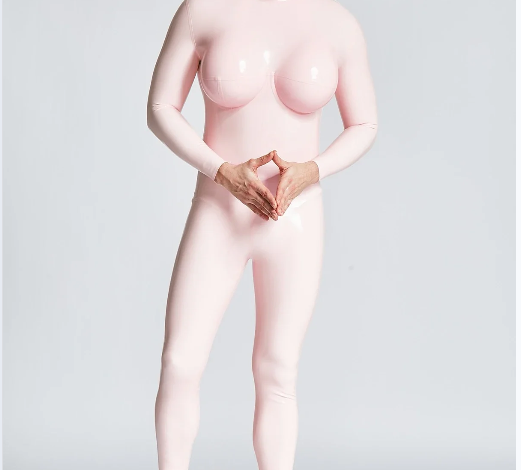
Receiving a made-to-measure latex hood that feels wrong is disappointing. You have taken the measurements, waited for the work to be finished and expected something that fits your head rather than an approximate standard size. If the latex feels loose or the openings do not line up, that expectation has not been met.
Our starting point should be to listen, not to tell the wearer that custom work cannot be wrong. Measurements, pattern interpretation, latex construction and positioning can all affect the result. Checking one does not remove the need to check the others.
A recent customer enquiry brought this into focus. The wearer described looseness across most of their latex hood, with the neck fitting better than the rest. They also reported that the nose openings sat too low and needed repeated adjustment to breathe comfortably. That second concern matters more than the appearance: a latex hood should not require constant repositioning to keep its breathing openings clear.
Breathing comes before the fit check
If a latex hood interferes with breathing, remove it immediately. Do not keep wearing it to obtain photographs or repeatedly pull it into position while struggling to breathe. If breathing difficulty continues after removal, seek urgent medical help.
We requested photographs to understand the fit and initially offered a complimentary remake. Photos can be useful, but they should never require someone to recreate an unsafe situation. Images of the latex hood off the head, together with a description of the problem, are a suitable starting point when wearing it is uncomfortable or affects breathing.
What our review could establish
Our team reviewed the supplied measurements and photographs and reported that the latex hood had been made to the measurements provided. We suggested a gentle adjustment to the position of the neck section as a possible way to improve how it sat.
That is not the same as proving that the fit problem was entirely caused by the wearer. A latex garment can match recorded measurements and still fail to fit as intended. The measurement path may have been misunderstood, the pattern may need adjustment, or the relationship between several measurements may not describe the wearer’s shape well enough.
Photographs also have limits. They can show folds in the latex and the apparent position of openings, but they cannot confirm comfort, airflow or every construction detail. At this stage, the suggested adjustment was a troubleshooting step, not a verified resolution.
Latex stretch does not replace an accurate pattern
Latex is elastic, but that does not mean one hood can adapt comfortably to every head shape. A close-fitting latex hood depends on the relationship between its panel shapes, the wearer’s measurements and the locations of the openings. Stretch alone should not be expected to correct a misplaced nose opening or unsuitable proportions.
Wrinkles are not a complete diagnosis either. A fold may reflect positioning, excess material or a mismatch in shape. Pulling the latex tighter until it looks smooth is not a reliable fit test, particularly around the face and neck.
Polished latex catches light differently from a less polished surface, which can make folds appear more or less noticeable in photographs. Shine is a finish, not evidence of a correct fit. What the wearer feels and whether the openings remain correctly positioned matter more than a smooth-looking image.
Head size does not describe the whole face
One circumference cannot locate every feature on a custom latex hood. The distance over the crown, the jawline, neck and position of facial openings need to be considered together. Our fully bespoke latex hood process can require 15 separate measurements, depending on the design.
The less obvious detail is how those measurements relate. A circumference describes a length around a particular path; it does not, by itself, specify where the nose sits within that path. Two people with a similar head circumference can need different latex panel proportions and opening positions.
That is why the measuring diagram matters. A forehead circumference, a jawline circumference and a measurement over the head and under the chin are different measurements, not interchangeable versions of head size.
Use the requested paths, keep the tape snug without pulling it tight, and state the units clearly. Provide actual measurements rather than subtracting an allowance for a tighter latex fit. If a path is unclear, ask before submitting it.
Position can matter without being the whole answer
A latex hood that has not settled into its intended position may show folds or displaced openings. Gentle positioning can sometimes help, but there is no universal “zero-error” wearing procedure that guarantees the right fit for every design and wearer.
If breathing is unrestricted and the hood is comfortable enough to assess, follow the maker’s dressing instructions. Smooth the latex gently and check how the crown, face and neck sit together. Avoid forceful pulling on small openings or using the neck section to lock the hood tightly in place.
If the nose openings remain displaced, the latex hood repeatedly shifts, or looseness persists, stop the fitting attempt and contact the maker. Needing to keep pulling a mask upwards to breathe is not something the wearer should have to accept.
Useful information for the after-sales team
Describe where the latex hood feels loose, tight or out of position, and mention any area that fits well. This is more informative than treating the whole garment as a single sizing issue.
Front, side and rear photographs may help the team compare the visible fit. Only provide wearing photographs if the hood does not affect breathing and you are comfortable doing so. Do not alter or cut the latex hood before discussing the issue with the maker.
Include the original measurements and units, any revised measurements and the specific latex hood design requirements agreed when ordering. Send photos and fit details to formlatex.co.uk so our after-sales team can review them together.
Made to measure should make the conversation more precise
A standard-size latex hood starts from a set of assumed proportions. Bespoke latex work uses individual information to refine those proportions, but neither approach guarantees comfort simply because a size or measurement has been recorded.
The value of custom work is the opportunity to investigate a mismatch and decide whether additional measurements, a pattern adjustment or a remake is needed. More complex latex construction is not a reason to dismiss a customer’s experience.
A successful fit is not just a latex hood that matches numbers on a worksheet. It also needs to sit as intended without painful restriction or compromised breathing. When it does not, the right response is a careful review and a practical solution, not an assumption about who is at fault.