
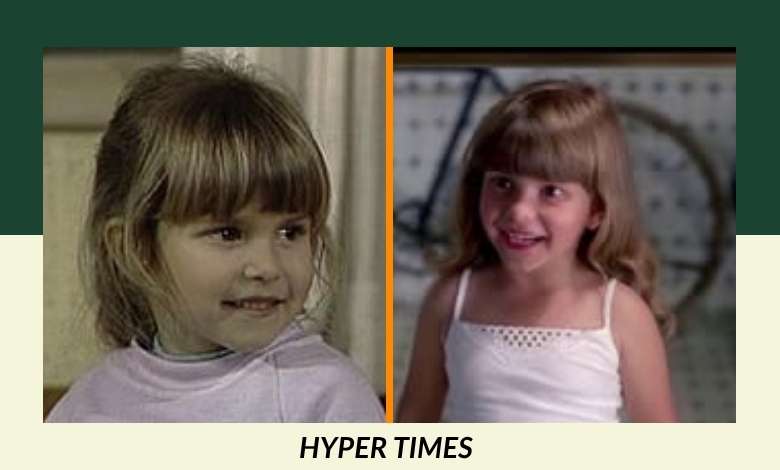
Maria Virovacz Barsi is remembered primarily as the mother of Judith Eva Barsi, the child actress whose short career included television, commercials, film work, and later voice roles that remained known after her death. Maria was not a public celebrity in the conventional sense, and that makes a factual biography of her more difficult to write. Most information about her appears in connection with Judith’s career, the Barsi family’s immigrant background, and the domestic violence case that ended in tragedy in 1988.
Because Maria’s independent, any responsible account of her life must avoid guessing about her private thoughts, personality, education, beliefs, or ambitions. What can be written with confidence is that she was a Hungarian immigrant, a mother deeply involved in her daughter’s early acting path, and a woman whose life became publicly discussed after the deaths of both mother and daughter in California. Her story remains important not because it offers a complete public biography, but because it reflects the human cost of family violence and the need to treat victims’ lives with dignity.
Quick Bio-Maria Virovacz Barsi
| Details | Information |
|---|---|
| Full Name | Maria Virovacz Barsi |
| Also Known As | Maria Barsi |
| Known For | Mother of child actress Judith Eva Barsi |
| Date Of Birth | 1940 |
| Nationality / Background | Hungarian immigrant background |
| Spouse | József Barsi |
| Child | Judith Eva Barsi |
| Residence | Los Angeles / West Hills, California area |
| Date of Death | July 1988 |
| Cause of Death | Killed in a domestic violence-related murder-suicide |
Who Was Maria Virovacz Barsi?
Maria Virovacz Barsi was the mother of Judith Eva Barsi, an American child actress born in Los Angeles on June 6, 1978. Judith became known for commercials, television appearances, and film roles, including work connected with Jaws: The Revenge, The Land Before Time, and All Dogs Go to Heaven. Maria’s name is most often mentioned in relation to Judith’s childhood career and the 1988 murder-suicide involving Judith’s father, József Barsi.
Maria’s life before marriage and motherhood is not fully documented in public records. Reports identify her as a Hungarian immigrant who came to the United States after the 1956 Soviet occupation of Hungary. She and József Barsi reportedly fled Hungary separately and later met in Los Angeles, where Maria worked as a waitress at a restaurant known among Hungarian émigrés.
The available record does not support many of the detailed claims sometimes repeated online about Maria’s private life. There is no widely verified public information about her full education, personal hobbies, religious beliefs, or broader professional background beyond the reporting that she worked as a waitress before her marriage. For that reason, the most accurate way to describe her is as a private individual whose public identity became tied to her daughter’s Hollywood career and the family tragedy that followed.
Hungarian Background and Life in the United States
Maria’s background is closely connected to the Hungarian immigrant experience after the political upheaval of the 1950s. The public record indicates that she and József Barsi left Hungary separately after the 1956 Soviet occupation. This detail is important because it places Maria’s early adult life within a larger historical movement of Hungarians who left their homeland during a period of political instability and uncertainty.
After arriving in the United States, Maria eventually became part of the Hungarian émigré community in Los Angeles. She reportedly worked as a waitress at a restaurant that served as a gathering place for Hungarian immigrants. This is one of the few specific details available about her working life before Judith’s career became the center of public attention.
Maria’s marriage to József Barsi was later described through the lens of conflict and domestic tension, but public reporting also noted that the couple’s early married years were remembered by some relatives as happier. Both had reportedly been married before, and József continued to work as a plumbing contractor even after Judith began earning income as a child performer.
Also Read: Who Was June Frances Nicholson? Jack Nicholson’s Mother and Her Private Life
Maria Barsi as Judith Barsi’s Mother
Maria’s most documented public role was as Judith’s mother. Judith was the couple’s only child, and Maria became closely involved in preparing her for acting opportunities. Public reporting states that Maria began training Judith for a Hollywood career when Judith was still very young, focusing on lessons such as posture, poise, and voice.
Judith’s entry into commercial acting happened after she was noticed at an ice-skating rink by members of a crew shooting a commercial. Maria’s early preparation is described as part of the foundation that helped Judith appear comfortable and polished in front of casting professionals. Still, it would be inaccurate to portray Maria as a formally documented entertainment manager unless that specific role is clearly supported by evidence. The safer wording is that she guided, supported, and helped prepare Judith for auditions and work.
Judith went on to appear in commercials, television programs, and films. She was often cast as younger children because of her small size, and reports described her as appearing younger than her actual age. Her career helped the family purchase a modest three-bedroom home in West Hills in 1985.
Family Difficulties and Publicly Reported Abuse
The Barsi household became the subject of public scrutiny after Judith and Maria’s deaths. Reports described József Barsi as controlling, angry, and threatening toward his family. Public accounts stated that he repeatedly threatened Maria and Judith over a period of years, and Maria filed a police report in December 1986 accusing him of threatening to kill her, choking her, and hitting her in the face. Police reportedly found no visible injuries, and Maria later declined to prosecute.
Judith’s distress also became visible to people around her. Her agent, Ruth Hansen, reportedly became concerned after Judith broke down before an audition in May 1988. Hansen urged Maria to take Judith to a child psychologist, and the matter was reported to Children’s Services. Public reporting later focused on how authorities handled the case and why intervention failed before the deaths occurred.
Maria reportedly had a plan to separate from József and had rented an apartment in Panorama City. According to public accounts, she spent time there with Judith during the day but still returned to the family home at night. This detail is often discussed because it shows that Maria had taken steps toward leaving, even though the situation remained unresolved.
The 1988 Tragedy
In July 1988, Maria Barsi and Judith Barsi were killed by József Barsi, who then died by suicide. Contemporary reporting described the killings as occurring during a period ending on July 27, 1988, and later accounts state that Judith and Maria were murdered in their West Hills, California home.
The case drew attention because warning signs had been reported before the deaths. Neighbors, relatives, and entertainment-industry figures were aware of threats in the household, and some had attempted to help. Public discussion afterward focused partly on the difficulty of responding to emotional and psychological abuse when physical evidence is limited or when victims remain inside the home.
A respectful biography of Maria should not reduce her life to the manner of her death. The tragedy is an essential part of the public record, but it should be presented carefully, without graphic repetition or sensational framing. Maria was a mother, an immigrant, and a private person whose story deserves accuracy rather than exploitation.
Also Read: Who Was Samuel Nowlin Reeves Jr.? Keanu Reeves’ Father and His Private Life
Philanthropy and Public Engagement
There is no strong public record showing that Maria Virovacz Barsi participated in documented philanthropy, public campaigns, charity work, or formal community leadership. This absence should not be treated as a negative judgment. Many private individuals live meaningful lives without leaving a public record of civic or charitable work.
In Maria’s case, the available information is concentrated around her family role and Judith’s acting career. Her most visible form of public engagement was connected to supporting Judith’s early work in entertainment. Beyond that, claims about charity, activism, or public causes should be avoided unless supported by reliable documentation.
Public Perception and Misconceptions
One common misconception is that Maria Virovacz Barsi has a fully documented biography available online. In reality, much of her life remains private. Her early life in Hungary, education, personal interests, and inner family decisions are not available in enough detail to build a complete independent profile.
Another misconception is that Maria was famous in her own right. She is publicly remembered because of Judith Barsi’s acting career and the tragic circumstances of 1988. That does not make her life less important, but it does mean that her biography must be written with careful limits.
A third misconception involves online repetition. Some websites may list details such as exact personality descriptions, motivations, or private family interpretations without strong evidence. A factual article should separate verified details from unsupported claims and should clearly state when information is limited.
Legacy and Future
Maria Virovacz Barsi’s legacy is inseparable from Judith Barsi’s memory. Judith’s voice work in animated films continued to reach audiences after her death, while Maria’s role is often remembered through the lens of motherhood, protection, and the painful circumstances surrounding the family’s final months.
Her story also remains relevant in discussions about domestic violence, emotional abuse, child protection, and the limits of intervention when warning signs are present but decisive action does not occur. Public reporting after the tragedy raised questions about how agencies respond to threats, psychological harm, and domestic instability involving children.
The future of Maria’s public memory depends on how responsibly writers, publishers, and readers handle her story. A respectful account should avoid turning tragedy into entertainment. It should focus on verified facts, acknowledge gaps in the record, and preserve the dignity of both Maria and Judith.
Also Read: Who Is Robert Lee Parton? The Life of Dolly Parton’s Father
FAQs About Maria Virovacz Barsi
Who was Maria Virovacz Barsi?
Maria Virovacz Barsi was the mother of Judith Eva Barsi, the child actress known for her film, television, and voice acting work.
Why is Maria Virovacz Barsi known?
She is mainly known because of her daughter Judith Barsi’s acting career and the tragic 1988 family case involving Judith, Maria, and József Barsi.
Where was Maria Virovacz Barsi from?
Maria Virovacz Barsi is reported to have had a Hungarian immigrant background.
Who was Maria Virovacz Barsi married to?
Maria Virovacz Barsi was married to József Barsi, Judith Barsi’s father.
How did Maria Virovacz Barsi die?
Maria Virovacz Barsi died in 1988 in a domestic violence-related murder-suicide involving her husband, József Barsi.
Conclusion
Maria Virovacz Barsi was a Hungarian immigrant, the wife of József Barsi, and the mother of child actress Judith Eva Barsi. Public information about her life is limited, but verified reporting shows that she worked as a waitress in Los Angeles, supported Judith’s early acting preparation, and became central to one of Hollywood’s most painful child-actor tragedies.
Her biography should be written with restraint. The confirmed facts are powerful enough without speculation. Maria’s life was more than the tragedy that made her name publicly known, yet the tragedy remains the reason many people search for her today. The most responsible way to remember her is through accuracy, compassion, and a clear refusal to invent details where the public record is silent.




One Comment