A new patio can transform how you use your garden. It becomes an extra room for summer dining, a spot for morning coffee and a clean, level space for furniture and planters. But with so many paving options available, choosing the right material can feel overwhelming.
The three most popular choices are porcelain, natural stone and concrete. Each has its strengths, and the best one for you depends on your style, budget and how much maintenance you are happy to do.
Porcelain paving
Porcelain has become one of the most popular paving choices in the UK, and it is easy to see why. It is made from fine clay fired at very high temperatures, which makes it dense, hard-wearing and highly resistant to water.
Pros:
• Very low water absorption, so it resists frost damage, moss and staining
• Easy to clean with little more than water and a brush
• Consistent colour and size, ideal for clean, modern designs
• Available in finishes that mimic natural stone, wood and concrete
Things to consider: Porcelain needs a specialist slurry primer on the back of each slab to bond properly to the mortar bed. It is also harder to cut, so you will need a diamond blade. It usually sits at the higher end of the price range.
Natural stone paving
Sandstone, limestone, slate and granite bring a timeless, characterful look that suits both traditional and contemporary gardens. No two slabs are quite the same, which gives the finished patio a natural, organic feel.
Pros:
• Unique colour and texture variation
• Weathers attractively over time
• Wide range of styles, from riven Indian sandstone to sleek sawn limestone
Things to consider: Natural stone is more porous than porcelain, so it benefits from sealing and occasional cleaning to keep it looking its best. Slabs can vary in thickness, which makes laying slightly more labour intensive.
Concrete paving
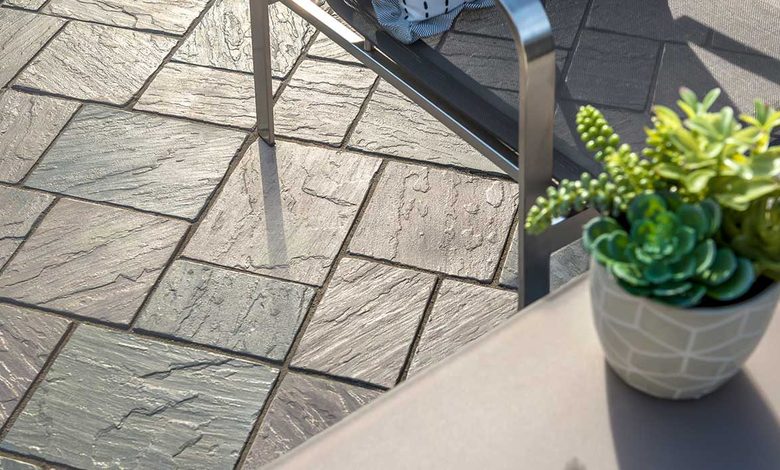
Concrete paving has come a long way. Modern decorative concrete slabs are available in a wide range of textures and colours, and many closely replicate the look of natural stone at a lower cost.
Pros:
• The most budget-friendly option
• Uniform thickness makes laying quicker and easier
• Strong and durable for everyday use
Things to consider: Colours can fade over time with sun exposure, and concrete is more prone to moss and algae than porcelain. A good sealer helps extend its life.
Don’t forget the extras
The paving itself is only part of the job. A long-lasting patio also needs a well-compacted sub-base of MOT Type 1, a mortar bed of sharp sand and cement, the right primer for your slabs and a quality jointing compound. Edgings, steps and walling help frame the space and give it a professional finish.
See before you buy
Paving looks very different in a brochure compared with real life, so it is always worth seeing the slabs in person, ideally in daylight and when wet as well as dry. A local builders and landscaping merchant will usually have samples or display areas you can walk around, along with staff who can advise on quantities and laying methods.
If you are in the East Midlands, you can explore porcelain, natural stone and concrete paving at William Hercock’s local depots in Melton Mowbray, Leicester and Oakham, where the team can help you choose the right paving for your garden and budget.
The bottom line
Choose porcelain if you want a modern look with minimal maintenance. Go for natural stone if character and texture matter most. Pick concrete if you want a durable, attractive patio on a tighter budget. Whichever you choose, good preparation is what makes a patio last for decades.