Choosing an air purifier for allergies starts with knowing what you react to and when. In a UK home, that can mean pollen drifting in through spring and summer, dust mites in bedding through the winter and pet dander all year round. As the heating goes on in autumn 2026, it’s worth matching the purifier to the problem.
Which allergens affect UK homes, and when?
UK allergies follow a calendar. The Met Office says tree pollen runs from late March to mid-May, grass pollen from mid-May until July and weed pollen from the end of June to September. Most people with hay fever react to grass pollen, while tree pollen affects around a quarter of them.
Indoor allergens carry on after the pollen season ends. The NHS lists house dust mites and pets, particularly cats and dogs, among common allergens. Allergy UK explains that dust mites feed on the dead skin cells we shed and prefer warm, humid conditions, so bedding, carpets and soft furnishings matter in a heated home.
Mould adds another layer in the damp months. UKHSA guidance notes that mould thrives in damp, poorly ventilated spaces and releases airborne spores. It links mould to leaks, condensation, poor heating and inadequate ventilation.
What does each filter layer do for allergens?
Pollen, dust mite debris and pet dander are airborne particles, so the layer that matters most is the one built for fine particles. A HEPA filter is designed to capture them from the air passing through it, and Allergy UK says an air purifier may help reduce indoor airborne allergens.
A pre-filter sits in front and catches larger particles such as hair and fluff, so less of it reaches the HEPA filter. A deodorisation layer, usually activated carbon, can help reduce some odours and gases, but it isn’t the part that deals with allergens. The Airmega 100, for example, combines a pre-filter, a HEPA filter and a deodorisation filter.
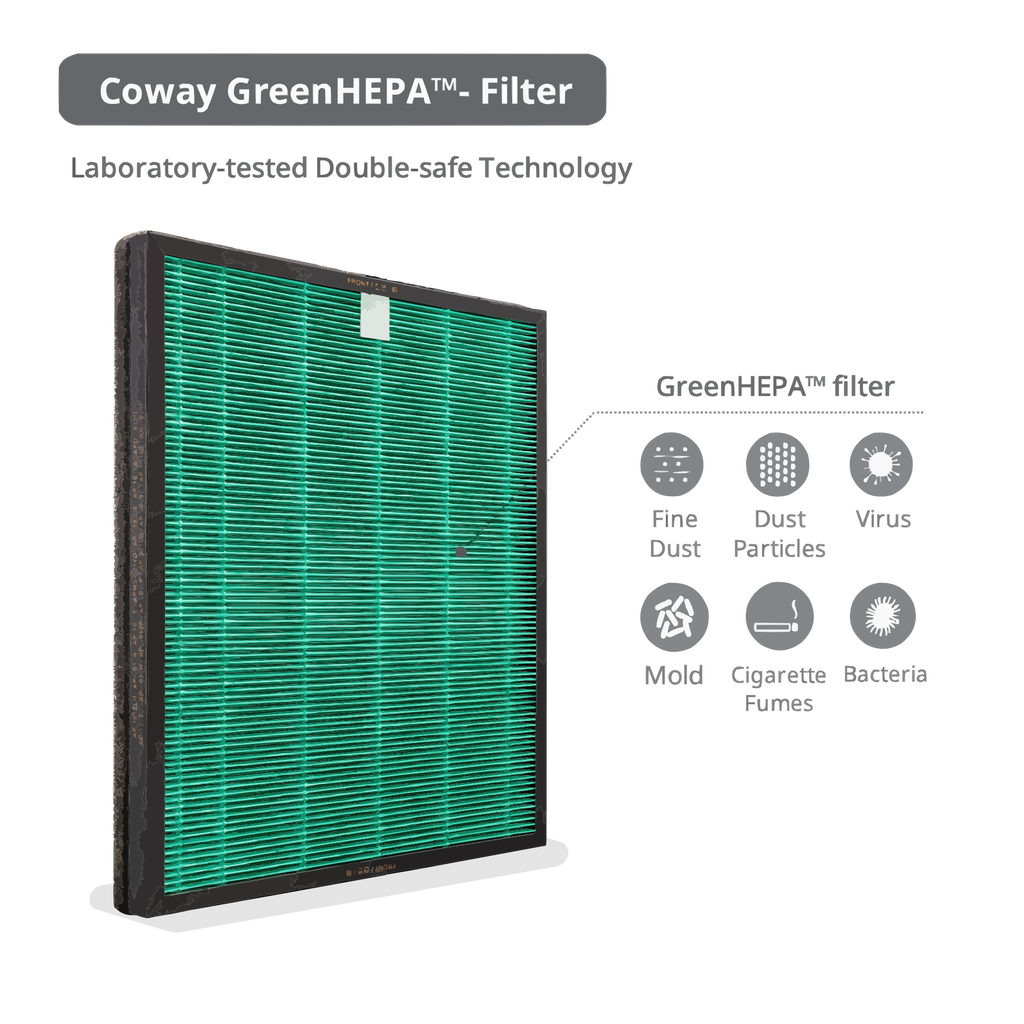
The pre-filter catches hair and fluff, the HEPA filter is designed to capture fine particles such as pollen and pet dander, and the deodorisation filter helps reduce odours.
Which features matter in an air purifier for allergies?
Allergen levels change through the day, so automatic control is worth looking for. On a Coway air purifier such as the Airmega 100, a PM2.5 sensor measures fine dust and Auto Mode adjusts the fan speed to the indoor air quality.
For a bedroom, check for a sleep mode and lights you can switch off at night. A washable pre-filter, as on the Airmega 150, makes routine care easier, and the Airmega 100 shows a filter replacement indicator when the filter is due.
If you are choosing an air purifier for allergies for your home, compare these features alongside the filter type. Check any performance figure for the test conditions behind it, such as room size and fan speed.
Where should an air purifier go: bedroom or living room?
Start in the bedroom if your symptoms are worse at night or first thing in the morning. Allergy UK advises aiming dust mite control at the rooms where you spend most time and where the mite load is greatest, which it names as bedrooms and living areas.
If someone at home is allergic to pets, Allergy UK also advises keeping pets out of the bedroom, which makes that room a sensible place for a purifier. Give the unit the clearance its manual asks for, and keep it away from curtains or furniture that would block the air inlet.
What can an air purifier not do?
A purifier only works on the air that passes through it, so allergens in bedding and carpets still need cleaning. Allergy UK advises washing bedding that is not in barrier covers every week and notes that washing at 60°C or above kills mites. It also recommends a vacuum cleaner with a HEPA filter.
An air purifier supplements ventilation and source control. It does not replace them and is not a medical treatment.
Damp needs fixing at source through ventilation and repairs. If your symptoms persist, speak to your GP.
FAQs
Do air purifiers help with hay fever?
Allergy UK says an air purifier may help reduce indoor airborne allergens, and pollen that drifts indoors is one of them. A purifier treats the air in one room, so place it where you spend most time and check the Met Office pollen forecast for high-pollen days.
Can an air purifier help with dust mites?
It can capture dust mite debris while it’s in the air, but the mites themselves live in bedding, carpets and soft furnishings. Weekly washing, damp dusting and vacuuming with a HEPA-filter vacuum cleaner tackle the source.
Is an air purifier worth it if I have a cat or dog?
It can help with pet dander, which Allergy UK says can become airborne and settle on furniture. Pair it with source control: wash pet bedding regularly on a hot wash and keep pets out of the bedroom.
What size air purifier do I need for allergies?
Measure the room’s floor area in m² and sq ft, then check it against the manufacturer’s room guidance and the test conditions behind it. Choose a unit you can run on a comfortable speed both day and night.
Should I run an air purifier all the time?
You can run it through the day and on a low setting overnight. On models with Auto Mode, such as the Airmega 100, the sensor raises the fan speed when it detects more fine dust and lowers it again as the air improves.
Match the purifier to your allergy calendar and to the room where symptoms are worst. Look for a HEPA filter, automatic control and easy filter care, and keep up the cleaning and ventilation that tackle allergens at source.