
Global distribution networks are navigating unprecedented operational turbulence. Rising fuel surcharges, geopolitical realignments, and erratic consumer demand have exposed the vulnerability of linear, human-dependent fulfillment models.
For high-throughput distribution hubs and manufacturing facilities, maintaining throughput velocity is no longer achievable through incremental headcount expansion alone. Industrial leaders are turning toward high-density mechanical automation to insulate critical logistics nodes from external disruption.
The Labor Shortage and Its Impact on Global Logistics
The global logistics sector is facing an acute demographic contraction. Across major manufacturing hubs in Western Europe and North America, warehouse vacancy rates for certified technicians and equipment operators hover at record highs, while annual turnover in manual fulfillment facilities routinely exceeds 40%.
This chronic labor deficit creates compounding operational bottlenecks across modern distribution centers:
- Prolonged Dwell Times: Unstaffed inbound docks increase container dwell times, compounding detention and demurrage penalties.
- Pick-and-Pack Inefficiencies: Manual order selection is physically constrained to 60 to 80 units per labor-hour, throttling parcel dispatch during seasonal peaks.
- Elevated Fulfillment Error Rates: Fatigue-driven picking errors lead to costly reverse logistics, with item return processing averaging $15 to $30 per parcel.
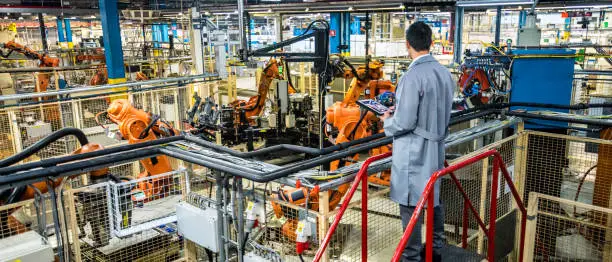
As skilled labor becomes increasingly scarce across Europe and Asia, reliance on manual quality control and assembly is no longer sustainable for high-volume manufacturers. To maintain output levels, operations directors are being forced to aggressively integrate omch, relying on advanced sensor networks and solid-state relays to take over repetitive tasks and minimize human error on the assembly line.
Addressing these persistent bottlenecks requires operations leaders to navigate changing global economic shifts by replacing manual assembly dependencies with deterministic electro-mechanical architectures.
Key Automation Technologies Driving Efficiency
Modernizing a logistics or manufacturing facility does not demand a sudden, multi-million-dollar greenfield rebuild. Instead, high-throughput fulfillment relies on robust industrial hardware components that execute precise physical tasks with microsecond reliability.
Automated Sorting and Conveyor Relay Systems
Automated sortation is the central nervous system of modern fulfillment centers, replacing manual push-carts with continuous, high-speed routing:
- Cross-Belt and Tilt-Tray Sorters: High-speed continuous loop sorters process packages at travel velocities exceeding 2.5 meters per second, segregating mixed parcels into designated shipping chutes with zero human intervention.
- Solid-State Relays (SSRs) for High-Frequency Switching: Traditional electro-mechanical relays suffer from contact pitting and physical wear under rapid start-stop duty cycles. Solid-state relays utilize optical isolation and silicon switching to actuate conveyor diverters millions of times without mechanical fatigue or electrical arcing.
- Industrial Switching Power Supplies: Unstable grid voltage in industrial parks can trigger logic crashes in delicate control hardware. DIN-rail mounted switching power supplies deliver ripple-free, short-circuit-protected 24V DC power rails to maintain continuous system uptime.
- Motor Protection and Overload Relays: Integrated thermal and electronic overload relays safeguard high-torque conveyor drive motors against phase imbalance, motor stalling, and thermal runaway during peak sorting volumes.
Precision Sensors for Inventory Tracking
Automated hardware is only as effective as the sensory inputs guiding its execution. High-precision discrete sensors provide the real-time feedback loops necessary for dynamic package handling:
- Photoelectric Through-Beam and Retro-Reflective Sensors: Operating on modulated infrared beams, these sensors detect package leading edges, initiate diverter gates, and verify carton gaps at switching speeds under 1 millisecond.
- Inductive Proximity Sensors: Enclosed in rugged IP67/IP68 nickel-plated brass or stainless steel housings, inductive sensors monitor roller shaft revolutions, track diverter shoe locations, and provide non-contact limit sensing immune to airborne dust and conveyor vibrations.
- Ultrasonic and Optical Volume Dimensioners: Overhead optical arrays scan parcel profiles in motion, dynamically calculating volumetric weight and package orientation to optimize downstream container loading.
- Fiber-Optic Sensor Amplifiers: In compact Automated Storage and Retrieval Systems (AS/RS), thin flexible fiber-optic cables detect micro-components and small polybags in spatial clearances where standard sensor bodies cannot fit.
Calculating the ROI of Automated Facilities
Justifying capital investments in automated material handling requires a structured evaluation of capital expenditures (CAPEX) against ongoing operational expenditures (OPEX). While manual facilities present lower upfront tooling costs, their ongoing variable labor costs escalate linearly alongside order volume.
Industrial automation fundamentally changes this economic equation by converting variable operational costs into predictable, amortizable fixed capital:
- Throughput Scalability: Automated shuttle and carousel systems achieve picking speeds of 300 to 600 picks per operator-hour, representing a 4x to 6x productivity multiplier over traditional push-cart picking.
- Error Rate Collapse: Automated optical sortation drives scanning and sorting error rates down from an industry-average 1.5% in manual facilities to less than 0.01%, virtually eliminating costly mis-shipment disputes.
- Floor Space Optimization: High-density automated vertical lift modules (VLMs) and AS/RS configurations reclaim up to 80% of floor area, allowing logistics providers to double storage capacity without acquiring additional warehouse real estate.
- Compressed Payback Windows: Because high-grade sensors, relays, and modular conveyor diverters can be deployed modularly, average capital payback periods typically settle between 14 and 24 months.
| Operational Metric | Manual Sorting Logistics | Automated Sensor-Driven Sorting | Operational Impact |
| Sorting Error Rate | 1.20% – 3.00% | < 0.01% – 0.05% | 98% reduction in misdirected parcels and return fees |
| Throughput Capacity | 60 – 100 units / labor-hour | 400 – 700 units / line-hour | 400%+ increase in peak fulfillment velocity |
| Space Utilization | High aisle clearance needed | High-density vertical stacking | Reclaims up to 80% of usable facility cubic volume |
| Operating Profile | Single/double shift dependent | Continuous 24/7 dark-facility capability | Eliminates overtime premiums during peak seasonal spikes |
| Primary Failure Risk | Labor absenteeism and ergonomics | Mechanical component wear | Mitigated via standardized modular spares and relays |
Building Long-Term Supply Chain Resilience
The global market disruptions of recent years have conclusively demonstrated that single-minded focus on minimum-cost sourcing leaves enterprises catastrophically exposed to systemic shocks. Supply chain excellence has evolved from just-in-time cost minimization into operational antifragility.
True operational resilience requires decoupling fulfillment capacity from local labor constraints. By embedding automated conveyor control, fault-tolerant switching relays, and automated guided vehicles (AGVs) directly onto the warehouse floor, enterprises create self-regulating logistics buffers capable of sustaining baseline throughput regardless of external volatility.
The volatility of the past few years has proven that efficiency alone is insufficient; companies must engineer their operations to withstand systemic shocks. A recent report by the World Economic Forum emphasized that investing inglobal supply chain resilience—primarily through localized automated manufacturing—is the most critical factor for business survival in the upcoming decade.
Integrating agile hardware into existing workflows allows distribution directors to execute adaptive logistics strategies with predictable operational expenditures.
As fulfillment windows continue to compress and qualified labor remains scarce, industrial automation is no longer a luxury reserved for multinational retail giants. For modern enterprise manufacturers and logistics operators, automated sensing and switching hardware represents the fundamental cornerstone of long-term operational viability.